



Four years ago this month, a survey of Gen Z consumers uncovered a remarkable surge of interest in sustainability, especially in fashion. The focus of the then-10- to 25-year-old crowd of about 70 million souls was on wasteful manufacturing and landfills of perfectly good, unsold apparel.
In 2022, three out of four Gen Zers said sustainable practices were more important than brand name when making purchase decisions. First Insight research also found that older generations’ interest was growing fast, influenced by their children and grandchildren.
Since then, sustainability has become a universal value. For Gen Z, it morphed into a trend that is disrupting pockets of the consumer economy and influencing the way the rest of America spends.
Gen Z is looking a lot like the hippie era of the mid-1960s to early 1970s when Boomers embraced postmaterialism. “Back to the land” was the vibe, and the “in” fashion look swung from status and bling to rugged and reused.
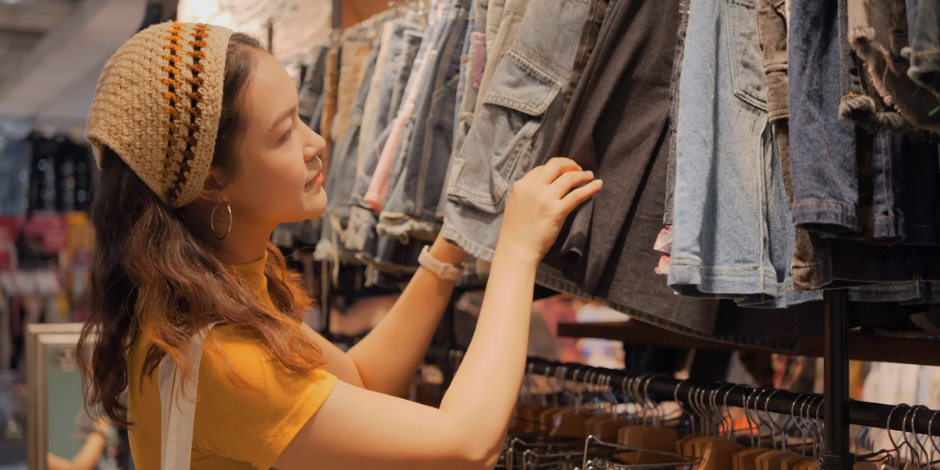
Today we are deep into a similar trend. The Gen Z-inspired thrifting movement has grown into a significant apparel industry market segment. Consider this unlikely but real headline which recently appeared on industry news site ModernRetail: “Goodwill plans 100 new stores for 2026 after hitting record revenue in 2025.”
Goodwill Industries, the 123-year-old, social-service nonprofit association of more than 3,000 thrift stores, recently reported 2025 sales of about $7 billion. That includes e-commerce revenue of about $450 million. For comparison, Burlington Stores, with 1,200 locations, reported revenue of about $11 billion last year.
All told, the thrifting industry is generating more than $50 billion a year in the U.S. and expected to grow by double-digit percentages for the next several years, according to ThredUp, a for-profit fashion-resale website. That represents about 15% of the total U.S. retail apparel market.
ThredUp said a Global Data survey of 2,000 shoppers found that consumers on average planned to spend nearly 40% of their 2025 holiday dollars on secondhand gifts.
The impact of the thrifting and resale movement on the apparel industry is hard to measure but theoretically could be substantial. For example, the online price list of a Goodwill outlet in the Chicago area lists secondhand blazers for about $6 and jeans for $5. At merchants like TJMaxx and H&M, a women’s basic blazer starts at about $40. Every secondhand blazer Goodwill sells could cost the apparel industry many times that in top-line revenue.
The thrifting trend reflects anti-consumer sentiment that is starting to show up more frequently in the headlines. A recent opinion piece in The Wall Street Journal by a New York University junior seems to capture the zeitgeist: “Why Gen Z Is ‘De-Influencing.”
“Influencers were supposed to make my generation more materialistic … to want the clothes, apartments and vacations we saw on social media,” writes Caroline Giuffra. “Instead, for many of us, constant exposure to staged and exaggerated wealth hasn’t intensified material desire; it’s drained it.”
Giuffra notes there is an “underconsumption” trend on TikTok that includes videos of people talking about adopting modest lifestyles. “Perhaps this is what postmaterialism looks like in the digital age. Not a rejection of beauty, but a rejection of spectacle.”
In an economy that recent economic news suggests is stalling, with consumers becoming skittish and finicky, how can retailers and brands entice and retain loyal customers? Exhibit “A” might be what is happening at Starbucks, a company that was once the darling of younger generations but lost its soul somewhere along the way.
In 2024, Bloomberg reported that the company was, “bleeding customers who no longer want to shell out for high-priced coffee drinks. The once-consistent in-store experience has also deteriorated.”
The company hired a new CEO and launched a back-to-basics campaign that analysts say seems to be paying off. The company restored the seating that had been removed and has been focused on reviving the “coffeehouse” experience, to make it more human.
In a world that is transactional and can be isolating, human-ness is the secret ingredient, says brand consultant Lou Dubois. In a piece he wrote for Inc Magazine last year, he advised, “Brands need to act, operate, and sound more human. Particularly in the age of AI, ensuring that your brand stands out with a consistent, non-automated voice is perhaps more critical than ever.”
Amen.